
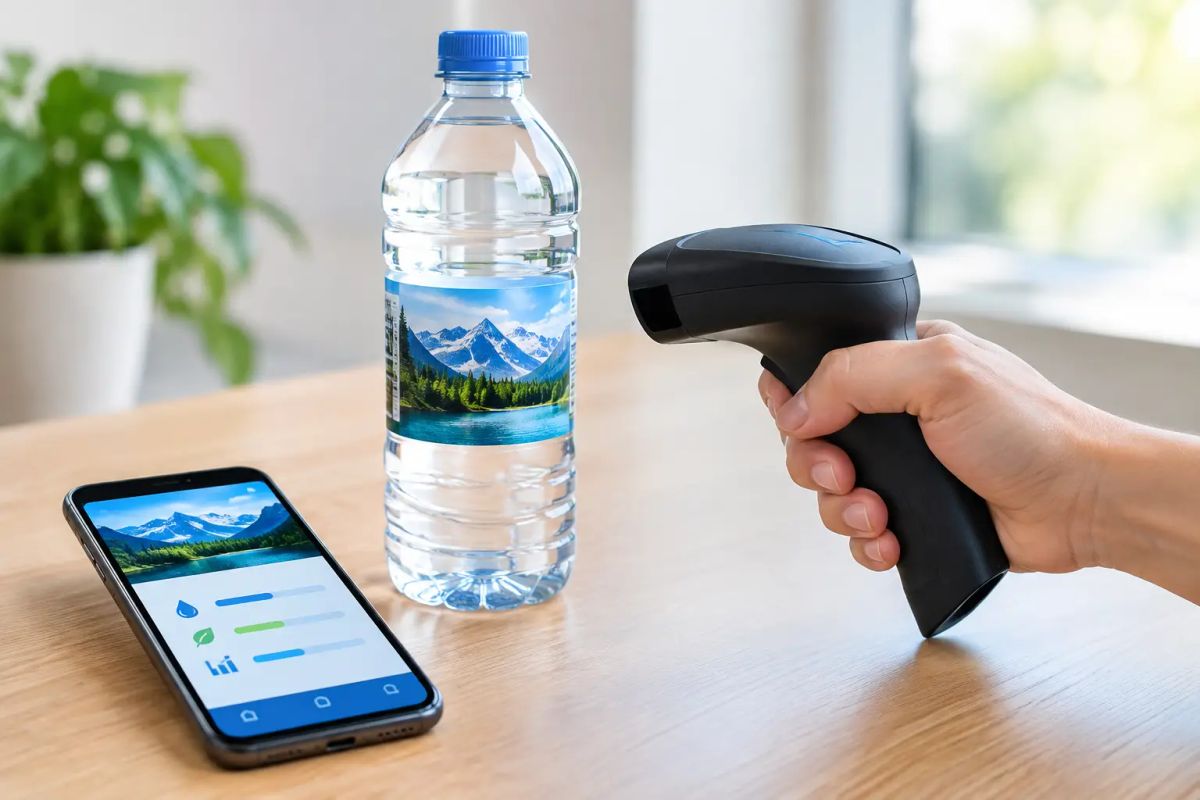
A water bottle can look simple on a restaurant table, a hotel minibar, or a grocery shelf. Yet the details behind it can be anything but simple: spring or mineral source, calcium and magnesium levels, sodium, bicarbonate, pH, and total dissolved solids. The best water label scanners turn that small-print information into something you can actually use - not as a verdict on what to drink, but as an invitation to taste with more awareness.
For curious drinkers, this changes the experience. Instead of choosing by packaging alone, you can begin to recognize why one water feels crisp and light while another seems rounder, firmer, or more mineral-forward. There is a world inside every bottle. A good scanner helps bring it into focus.
What a Water Label Scanner Should Actually Do
A water label scanner is most valuable when it does more than capture words from a label. It should help identify the bottled water in front of you, organize key composition details clearly, and give those details enough context to be meaningful.
Identify the bottle, not just the text
Water labels are often designed for elegance rather than easy reading. Mineral analyses may appear in a small panel, use unfamiliar units, or be absent from the front label entirely. A camera-based scanner can make the first step easier by helping recognize the product from the bottle itself.
Recognition matters, but it is only the beginning. A useful result connects the bottle to the information a thoughtful drinker is likely looking for: where it comes from and how its mineral profile is expressed. If an app simply returns a product name, it has saved a few seconds. If it makes the composition legible, it has added genuine value.
Translate mineral information without flattening it
Numbers deserve explanation. Calcium, magnesium, sodium, and bicarbonate are not decorative facts, and neither are pH and TDS. Together, they offer a way to understand a water’s composition and, often, its sensory direction.
A low-TDS water may present as delicate and restrained. A higher-TDS water may feel more present on the palate, though the number alone cannot predict the full tasting experience. Bicarbonate can be a useful marker of a water’s underlying mineral character, while calcium and magnesium can contribute to a firmer, more structured impression. Context is what turns a data table into a conversation.
The best experiences avoid pretending that one number tells the whole story. Water is a category of nuance. Source geology, bottling practices, carbonation, serving temperature, and the food beside the glass all shape perception.
How to Judge the Best Water Label Scanners
The best water label scanners are not necessarily the ones that display the most figures at once. They are the ones that make those figures easy to find, easy to understand, and worth returning to.
Start with recognition quality. The camera flow should feel immediate: point your phone, capture the bottle, and receive a clear response. A scanner that struggles with ordinary label conditions - reflective glass, low restaurant lighting, a partially turned bottle - creates friction at precisely the moment curiosity strikes.
Next, look at the depth of product information. At minimum, a useful scanner should present source origin and the core composition details that distinguish one bottled water from another. Calcium, magnesium, sodium, bicarbonate, pH, and TDS each reveal a different dimension of the profile. The ideal presentation is concise enough for a store aisle and considered enough for a dinner-table conversation.
Clarity matters as much as coverage. Mineral data should not be buried under technical jargon or displayed without units and labels. A good app makes it possible to move from a quick glance to a closer look without making either experience feel overwhelming.
Finally, consider whether the scanner treats water as a product with identity. A bottle from a protected spring, a mineral source, or a remote aquifer carries a story of place. Source context does not make the water objectively better, but it can make the choice more interesting. For people who care about food, wine, coffee, and hospitality, that story belongs at the table.
A Refined Option for Mineral and Source Context
Water Sommelier is designed for people who want to look beyond the logo on the bottle. Available as a free app for iPhone and Android, it uses your phone camera to help identify bottled water and surface educational information about its mineral composition, pH, TDS, and source origin.
The experience is deliberately direct: point, shoot, know. But the purpose is more considered than a quick lookup. By placing calcium, magnesium, sodium, bicarbonate, pH, TDS, and origin in one readable view, the app helps make a bottle’s character easier to explore.
That distinction is useful when you are comparing waters on a shelf, selecting a bottle for a meal, or writing about a dining experience. You are not being told what you should prefer. You are being given a clearer vocabulary for noticing the difference between a softly mineral water and one with a more pronounced profile.
How to Use a Scanner With Better Taste
The camera is only the first instrument. What you do with the information is where the experience becomes richer.
Begin by scanning two or three bottled waters you already know. Compare their source origins, then look at mineral levels rather than jumping immediately to pH. Notice whether one shows a more substantial TDS figure, whether bicarbonate is prominent, or whether calcium and magnesium are comparatively low or high. These details give you a basis for observation, not a universal ranking.
Then taste deliberately. Serve the waters cold but not icy if you want more of their character to come through. Take a small sip and notice the opening impression, the texture across the palate, and the finish. Does the water seem featherlight, creamy, crisp, saline, or lingering? Those are sensory descriptions, not scientific measurements, but pairing them with composition data can make your own preferences more intelligible.
At a meal, use the scan as a starting point rather than a performance. A delicate water may feel especially at home beside subtle raw seafood or fresh vegetables. A more mineral-present water can hold its own with richer dishes. There are no rigid rules here. The pleasure lies in paying attention.
Read the Data With the Right Expectations
A water label scanner is an educational guide, not a laboratory analysis. The information available for a bottled product may reflect a published analysis, and naturally occurring mineral content can vary over time. Packaging may also provide different levels of detail depending on the product and market.
This is why a good scanner should encourage curiosity rather than false certainty. pH, for example, is a single property measured under particular conditions; it is not a shortcut to defining an entire water. TDS is equally useful as a broad indication of dissolved mineral content, but it does not identify every mineral or explain every flavor note.
The most meaningful reading comes from patterns. A source origin paired with a mineral profile and your own tasting impressions tells a more complete story than any isolated number. When the information is presented clearly, you can decide how deeply you want to explore.
Choose the Scanner That Matches Your Curiosity
If you only want a fast product name, nearly any basic recognition tool may feel sufficient. But if you want to understand what minerals are in your water, how the composition is balanced, and where the bottle’s story begins, look for a scanner built around those questions.
For a food writer, that may mean a clean source narrative and data that can support more precise tasting notes. For a restaurant professional, it may mean a quick way to speak confidently about a bottle at the table. For the thoughtful shopper, it may simply mean leaving the store with a choice that feels considered rather than random.
The finest water experiences rarely begin with a grand gesture. Sometimes they begin with a bottle, a label, and a closer look.
Scan any bottle. Discover its minerals, origin, and character. Get the Water Sommelier app.