
A bottle of water can look almost blank on the shelf, yet it may carry the character of a glacial aquifer, a protected spring, a deep well, or a municipal source. Learning how to compare water sources turns that simple bottle into something more legible: an expression of place, geology, and composition.
The goal is not to declare one source universally superior. Water is not a hierarchy. It is a category with styles. A low-mineral spring water and a distinctly saline mineral water can both be beautifully made, just as a crisp Muscadet and a rich Chardonnay can both belong at the table. The useful question is: what is this water, and what experience do you want from it?
Start With the Source Statement
Begin with the wording on the bottle. Source language offers a first clue about a water’s journey before bottling, although it does not tell the entire story by itself.
Spring water is collected from an underground formation from which water flows naturally to the surface, or is accessed through a borehole near the spring. Its profile is often shaped by the rock it moves through underground. Depending on that geology, a spring water may be feather-light and delicate or notably mineral-rich.
Mineral water generally comes from a protected underground source and contains naturally occurring minerals and trace elements. The term is often associated with a more pronounced sense of place, but the actual composition still varies widely. Always read the analysis rather than assuming the style from the category name.
Artesian water comes from a confined aquifer, where underground pressure causes water to rise in a well. This describes the aquifer structure and collection method, not a guaranteed taste profile. One artesian water may be soft and quiet; another may have substantial mineral presence.
Purified water has been processed to remove dissolved substances and other materials, then may be bottled as is or have minerals added back for flavor. It can offer a clean, neutral style. Its source origin may be less central to its identity than its treatment and final composition.
A source statement is a starting point, not a scorecard. Look for specificity. Does the bottle name a spring, aquifer, region, or bottling location? Clear provenance gives you more context for understanding the water in your glass.
How to Compare Water Sources Beyond the Label
The most revealing comparison comes from placing origin beside mineral composition. Think of origin as the water’s provenance and minerals as its structure.
Read calcium and magnesium together
Calcium and magnesium are among the most familiar minerals listed in a water analysis. In sensory terms, they can contribute to a fuller, more rounded impression on the palate. Waters with higher levels may feel broader or more substantial than very low-mineral waters.
Numbers matter, but comparison matters more. If one bottle lists modest calcium and magnesium while another lists considerably more, you can reasonably expect a difference in weight and texture. That does not mean either is “better.” It means they are likely to occupy different places on your table.
Notice sodium without making assumptions
Sodium can shape flavor quickly. At lower levels, it may be nearly imperceptible. At higher levels, it can create a subtly savory or saline edge that some people enjoy, especially alongside food.
Do not reduce sodium to a single judgment. A water with a noticeable sodium level can be an intentional, characterful choice. It may simply be less suited to the person seeking a neutral, barely-there profile. Read it as part of the composition, not in isolation.
Let bicarbonate explain the finish
Bicarbonate is one of the most useful figures for understanding a water’s personality. Often associated with water that has traveled through limestone-rich terrain, it can lend a soft, rounded, sometimes faintly chalky impression and influence how the finish lingers.
A water with more bicarbonate may feel composed and expansive, particularly when served with food. A low-bicarbonate water may come across as cleaner, crisper, and more fleeting. Neither description is a quality verdict. They are sensory directions.
Use TDS as a measure of intensity
TDS, or total dissolved solids, is the combined amount of dissolved minerals and substances in water, usually expressed in milligrams per liter. It is a valuable shorthand for overall mineral intensity.
Very low TDS water often tastes light, clean, and subtle. Moderate TDS can bring balance and texture. Higher TDS water may feel more structured, mineral, or saline. Yet TDS cannot tell you which minerals are present, so it should never replace the full mineral analysis.
Two waters can have similar TDS and taste entirely different. One may be calcium-forward and rounded; another may be sodium-led and more savory. TDS tells you the volume of the orchestra, not which instruments are playing.
Keep pH in perspective
pH describes whether water is acidic, neutral, or alkaline on a scale from 0 to 14. It is frequently featured on labels because it is easy to recognize, but it is only one point of reference.
A pH number does not fully predict taste, source quality, or mineral content. Mineral balance, carbonation, temperature, and serving context can all influence what you perceive. Consider pH as a piece of the profile, not the headline.
Compare Water by the Moment You Are Serving
Once you understand the data, the enjoyable part begins: matching a water’s character to an occasion.
For a quiet glass at your desk or beside a delicate meal, you may prefer low-mineral water with a restrained finish. It leaves room for subtle flavors and asks little of your attention. With richer dishes, aged cheese, cured foods, or a lingering coffee course, a water with more mineral structure can feel more present and complementary.
Sparkling water introduces another layer. Carbonation changes texture, aroma perception, and pace. A softly sparkling water can feel elegant with lighter food, while assertive bubbles and a pronounced mineral profile can stand up to bolder flavors. Again, there is no universal pairing rule. The useful habit is to taste, notice, and compare.
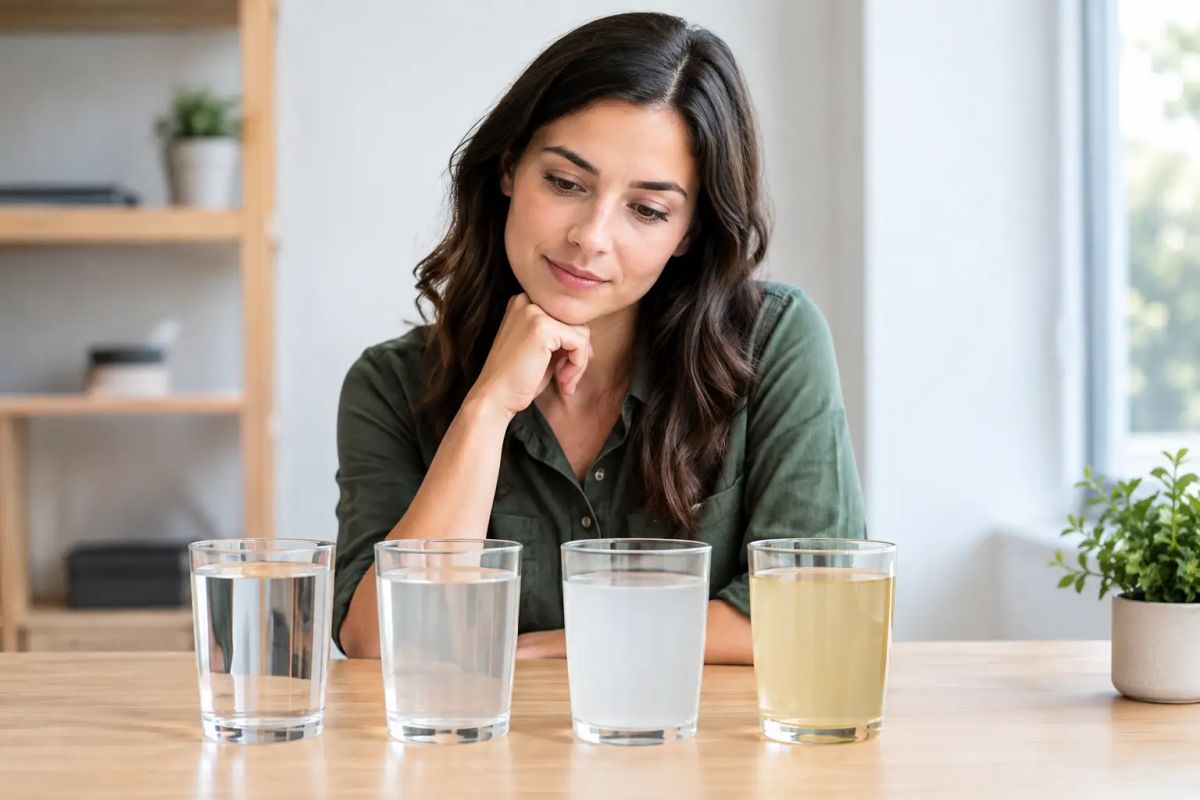
Serve waters at similar temperatures when evaluating them side by side. Cold temperatures can mute flavor, so water that is ice-cold may reveal less mineral character than the same water served cool rather than frigid. Use clear glasses, take small sips, and pause between samples. Notice first impression, texture through the middle of the palate, and the length and character of the finish.
A Better Way to Compare Bottles on the Shelf
When choosing between unfamiliar bottles, give yourself a simple sequence. First, identify the stated source and place of origin. Next, scan calcium, magnesium, sodium, bicarbonate, TDS, and pH if available. Then decide what kind of experience you want: quiet and delicate, rounded and mineral, or vivid and saline.
If the label is hard to decipher, a water-intelligence app can make the process more immediate. Water Sommelier lets you point your phone camera at a bottle to help identify it and surface details such as source origin, mineral composition, pH, and TDS for educational exploration. Point. Shoot. Know.
The point is not to turn every purchase into a technical exercise. It is to develop a fluent eye. Over time, you will recognize that a source is more than a place name, TDS is more than a number, and mineral analysis is not merely fine print.
There is a world inside every bottle. Compare with curiosity, choose with intention, and let the water at your table say something about the landscape it came from.
Scan any bottle. Discover its minerals, origin, and character. Get the Water Sommelier app.