
A bottle marked 35 mg/L and one marked 1,200 mg/L may both be beautifully sourced waters, yet they will offer entirely different experiences at the table. Knowing how to evaluate water TDS gives you a useful first read on that difference. It is not a scorecard for “good” or “bad” water. It is a clue to the world inside the bottle.
TDS, or total dissolved solids, tells you the approximate amount of dissolved material in water. For mineral water, that material is often made up largely of minerals such as calcium, magnesium, sodium, potassium, bicarbonate, sulfate, chloride, and silica. The number is concise. Its meaning is more nuanced.
What Water TDS Actually Measures
TDS is usually expressed in milligrams per liter (mg/L), which is effectively equivalent to parts per million (ppm) in water. A stated TDS of 500 mg/L means that, after the water is evaporated under specified conditions, roughly 500 milligrams of dissolved material would remain from each liter.
That remaining material is not one thing. It is a mineral fingerprint made by geology, source conditions, and, in some cases, carbonation or bottling choices. Two waters can share a TDS of 300 mg/L while tasting remarkably different because their mineral compositions are different.
A calcium- and bicarbonate-led water may feel rounded, gently chalky, or structured. A water with a notable sodium and chloride presence can read as softly saline. Sulfate may bring a drier, more assertive finish. TDS records the quantity of dissolved solids, not their individual identities.
This distinction matters. Treat TDS as the opening line of a water’s story, not the full tasting note.
How to Evaluate Water TDS on a Bottle
The most useful place to start is the bottle label, a producer’s mineral analysis, or reliable product information that lists the water’s composition. Look for a number described as total dissolved solids, dry residue, mineralization, or residue at a stated temperature. These terms can be used differently by producers, so read the surrounding details rather than assuming every figure was measured in exactly the same way.
Then place the number into a broad tasting range. These ranges are not rules, and they should never replace the actual mineral panel.
Low TDS: Under 50 mg/L
Water in this range is typically light, clean-lined, and quiet on the palate. It often has little lingering mineral presence and can feel almost weightless. That restraint can be appealing alongside delicate dishes, subtle tea, or any moment when you want the water to stay in the background.
Low TDS does not mean empty of character. Source, carbonation, temperature, and trace minerals can still create a distinct impression. It simply signals that the dissolved mineral load is modest.
Moderate TDS: About 50 to 250 mg/L
This is a broad, versatile territory. Many waters in this range offer a clear sense of structure without dominating a meal. Depending on the mineral balance, they may seem silky, crisp, faintly sweet, stony, or softly rounded.
For everyday comparison, this range is where the mineral panel becomes especially valuable. A 150 mg/L water led by bicarbonate will not necessarily resemble a 150 mg/L water shaped by sulfate or sodium.
Elevated TDS: About 250 to 1,000 mg/L
At this level, mineral character usually becomes easier to recognize. The water may have more body and persistence, with a noticeable finish after each sip. Calcium and magnesium can contribute texture, while bicarbonate can give a composed, almost creamy impression.
These waters can be compelling at the dining table because they hold their presence. But “more” is not automatically “better.” A bold mineral profile can be exquisite with a rich dish and distracting beside a fragile one.
High TDS: Above 1,000 mg/L
High-TDS water is often unmistakable. It may be dense, saline, intensely mineral, or vividly dry, depending on the ions involved. For many people, it is an acquired taste. For others, it is precisely what makes a particular source memorable.
Approach these bottles as you might approach a distinctive cheese or a single-origin coffee: with attention, curiosity, and an expectation of personality. Serve them cool rather than ice-cold so the mineral character is present but not exaggerated.
Do Not Judge TDS in Isolation
The central mistake when learning how to evaluate water TDS is assuming that a lower number is cleaner or that a higher number is more premium. Neither conclusion follows from TDS alone.
TDS does not identify every dissolved substance. It also does not tell you the proportion of calcium versus magnesium, whether bicarbonate dominates, how the water was sourced, or whether the flavor will suit your palate. A TDS figure cannot certify quality, safety, or authenticity on its own.
Instead, read TDS beside the mineral breakdown. Start with calcium, magnesium, sodium, and bicarbonate if they are listed. These four give a useful first sense of a water’s shape. Calcium and magnesium often contribute firmness and texture; sodium can create a gentle savory note; bicarbonate frequently adds roundness and length. Sulfate, chloride, potassium, silica, and pH add further context.
pH deserves the same measured approach. It describes acidity or alkalinity, not mineral content or taste by itself. A water’s pH may help complete the profile, but it should not be used as a shortcut around the mineral composition.
Reading a TDS Meter With Care
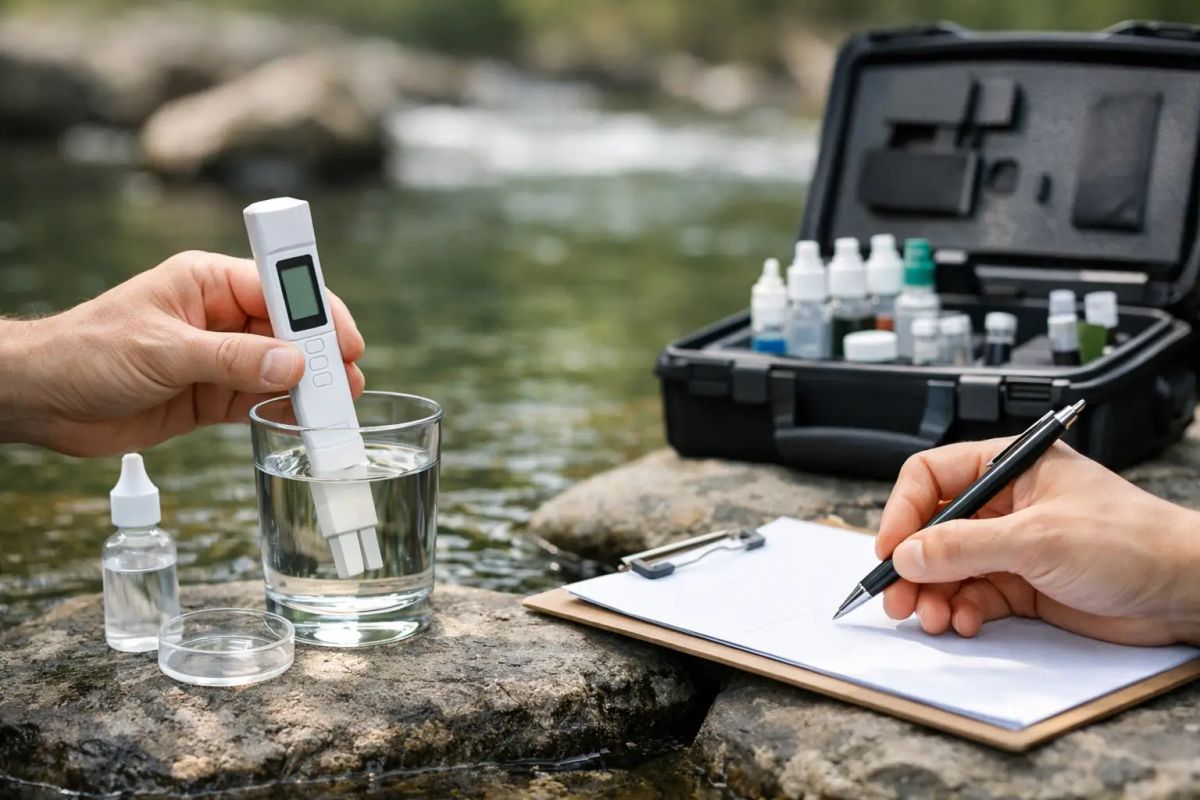
A handheld TDS meter can be an interesting educational tool, especially when comparing waters side by side. Most consumer meters estimate dissolved solids by measuring electrical conductivity and applying a conversion factor. In plain terms, they are estimating how much dissolved, electrically conductive material is present.
That is useful, but it has limits. Different minerals conduct electricity differently, which means the same true dissolved-solids level can produce different meter results depending on composition. Temperature, calibration, and the meter’s conversion setting can also affect the reading.
For a meaningful comparison, use the same clean vessel, test waters at similar temperatures, and follow the meter’s calibration instructions. Compare the result with the producer’s stated analysis, but do not expect a perfect match. The bottle’s laboratory mineral analysis is generally the more informative reference for that specific water.
A meter is best used as a way to notice relative differences: this water reads much lighter than that one; this sparkling water changes after losing carbonation; this familiar bottle has a more mineral-forward profile than expected. It is not a substitute for a complete mineral analysis.
Taste the Number, Then Taste Beyond It
TDS becomes memorable when you connect it to sensation. Pour two still waters into identical clear glasses. Choose one low-TDS and one with a moderate or elevated TDS. Let them sit briefly, then taste them at the same temperature.
First notice the opening: does the water arrive sharply, softly, or with immediate weight? Next, pay attention to the middle of the palate. Is it creamy, crisp, chalky, saline, or neutral? Finally, consider the finish. Does the flavor disappear quickly, leave a faint mineral echo, or stay present with a dry, stony quality?
Write down the TDS figure beside a few sensory words. Over time, you will start to recognize patterns without forcing them. A number that once looked technical becomes a useful cue for body, intensity, and food-pairing potential.
Sparkling water introduces another variable. Carbonation changes texture and aroma perception, and it can make a mineral profile feel brighter or more pointed. When comparing TDS between still and sparkling bottles, separate the role of dissolved minerals from the liveliness created by bubbles.
Use TDS as a Pairing Cue
At a meal, low-TDS water often works beautifully where precision matters: raw seafood, mild vegetables, fresh fruit, or a refined tea service. Its restraint leaves room for subtle flavors.
Moderate-TDS water is often a flexible companion for a broad menu. Its balance can suit roast chicken, pasta, salads with vivid acidity, and many cheeses without taking control of the table.
Waters with elevated or high TDS can stand alongside bolder flavors. Think aged cheese, cured meats, grilled dishes, deeply flavored sauces, or dark chocolate. This is not a fixed pairing formula. The best match depends on whether the water’s specific minerals bring softness, salinity, dryness, or weight.
For a faster way to read a bottle’s mineral composition, pH, TDS, and source origin, Water Sommelier lets you point your phone camera at the label and explore the details in a clear, educational format. The point is not to turn water into a test. It is to make attention feel effortless.
The next time you encounter a TDS number, resist the urge to rank it immediately. Pour the water, read its mineral profile, and notice its finish. A single figure can guide your first impression, but your palate is where the story becomes personal.
Scan any bottle. Discover its minerals, origin, and character. Get the Water Sommelier app.