
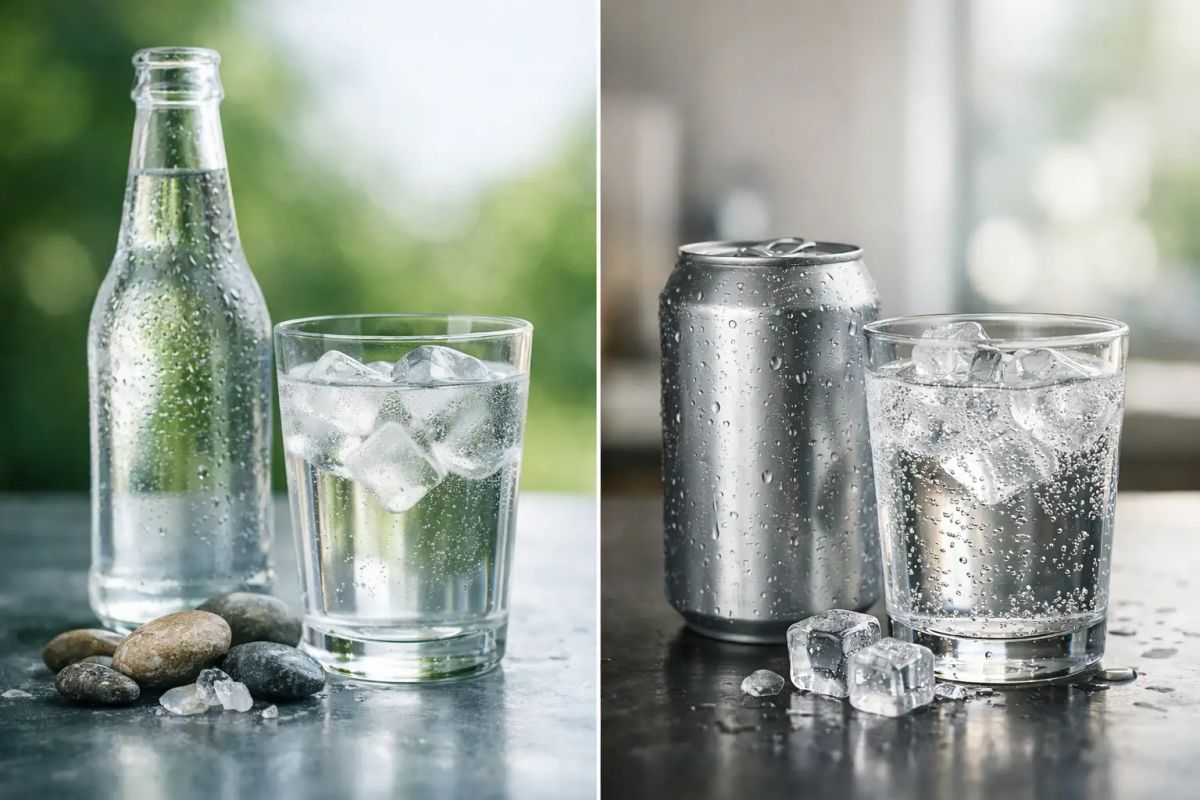
A lively bubble can make two bottles seem interchangeable. Yet mineral water versus soda water is not simply a choice between sparkling and still. One begins with a particular source and its natural mineral character. The other is typically built for consistency, with carbonation and mineral salts added to purified water.
That distinction changes what is written on the label, how the water feels across the palate, and where it belongs at the table. There is a world inside every bottle, but first, it helps to know which kind of world you are holding.
Mineral Water Versus Soda Water: The Core Difference
Mineral water is defined by origin. It comes from a protected underground source and contains naturally occurring dissolved minerals. In the United States, water labeled mineral water must contain at least 250 parts per million of total dissolved solids, or TDS, from its source. Those dissolved solids may include calcium, magnesium, bicarbonate, sulfate, sodium, chloride, and other naturally present minerals.
The mineral profile is not a recipe added after the fact. It is the water's signature, shaped by the rock and soil it travels through before bottling. Two mineral waters can therefore taste dramatically different: one may be soft and rounded, another dry and saline, another bright with a fine, chalky finish.
Soda water, often called club soda, follows a different path. It is usually purified water that has been carbonated, then adjusted with mineral salts for a familiar, clean sparkling profile. The precise formula varies by producer, but sodium bicarbonate, potassium bicarbonate, sodium citrate, or other salts may appear on the ingredient list.
Neither category is inherently more sophisticated. They are made for different purposes. Mineral water offers a sense of place. Soda water offers dependable lift, clarity, and versatility.
Carbonation Is Only Part of the Story
Both mineral water and soda water may sparkle, but carbonation alone does not identify the category. A mineral water may emerge naturally effervescent at the source, may have its natural carbon dioxide removed and restored, or may receive additional carbon dioxide before bottling. The label should clarify the product's presentation.
Soda water is generally carbonated intentionally. Its bubbles can range from broad and energetic to tight and delicate, depending on pressure, temperature, packaging, and how long the bottle has been open. In a highball, this consistency is often exactly the point.
Sparkling mineral water carries two layers of character at once: the texture of the bubbles and the flavor of its mineral composition. That is why a sparkling mineral water can feel creamy, flinty, saline, or brisk even when its carbonation level appears similar to another bottle.
How the Minerals Change the Taste
Minerals do not make water taste like a flavored beverage. Their influence is more restrained and more interesting. Think of them as structure rather than seasoning.
Calcium can lend a gentle firmness or chalk-like quality. Magnesium may read as dry, mineral-forward, or faintly bitter. Bicarbonate often creates a rounded, smooth impression. Sulfate can bring a crisp, sometimes more assertive edge. Sodium and chloride can introduce a subtle savory or saline note.
TDS is useful context, not a scorecard. It measures the combined amount of dissolved material in water, usually expressed in milligrams per liter. A higher TDS mineral water often has a more noticeable presence on the palate, while a lower-TDS water may seem lighter and quieter. But two waters with similar TDS can still taste unlike one another because their mineral balances differ.
Soda water may contain added salts, but its flavor is usually designed to remain neutral and predictable. It can have a faint mineral snap or a soft saline quality, especially when compared side by side with plain carbonated water. That makes it a practical choice when the rest of the drink should take center stage.
Read the Bottle Like a Sommelier
The fastest way to distinguish these waters is to move beyond the front label. Turn the bottle around and look for its source statement, nutrition facts, ingredients, and language about carbonation.
A mineral water bottle commonly names a spring, aquifer, or geological source. It may include a mineral analysis listing calcium, magnesium, sodium, bicarbonate, sulfate, and TDS. Some labels also specify whether the water is naturally sparkling or carbonated.
A soda water label is more likely to list ingredients beyond water and carbon dioxide. Added mineral salts are not a flaw. They simply signal that the mineral profile was formulated rather than acquired through a specific underground journey.
Watch the wording carefully. “Sparkling water” is a broad presentation term, not always a declaration of source or mineral content. “Mineral water” speaks to the water's origin and naturally occurring dissolved solids. “Soda water” or “club soda” generally points to carbonated water with added salts. “Seltzer” is commonly carbonated water without added mineral salts, although label language remains the final authority.
Which One Belongs in Your Glass?
Choose mineral water when curiosity is part of the occasion. It rewards slow tasting, side-by-side comparison, and food pairing. A lightly mineralized, finely sparkling bottle can bring freshness to delicate seafood or raw vegetables. A fuller, more saline mineral water can stand comfortably alongside cured meats, aged cheese, or richly seasoned dishes.
Choose soda water when you want a reliable sparkling foundation. Its clean, repeatable profile is well suited to cocktails, spritzes, and nonalcoholic mixed drinks where citrus, bitters, juice, tea, or botanicals set the flavor direction. In that role, its restraint is a virtue.
There are practical considerations, too. A favorite mineral water may not always be available in a restaurant, hotel, or neighborhood market. Soda water is widely available and often easier to use when you need a particular bubble style without introducing a strong mineral identity. Context matters more than hierarchy.
A Better Way to Compare Bottles
Taste the waters cold but not ice-cold, since extreme cold can mute both aroma and mineral expression. Pour each into a clean glass, observe the bubble size and persistence, then take a small sip. Notice the opening impression, mid-palate weight, and finish.
Ask simple, useful questions. Does the water feel light or substantial? Are the bubbles creamy, prickly, or quick to disappear? Does the finish seem clean, chalky, dry, or subtly saline? These are tasting observations, not right-or-wrong verdicts.
For a clearer comparison, look at the same details across bottles: source origin, calcium, magnesium, sodium, bicarbonate, pH, and TDS. Water Sommelier makes that process more immediate. Point your phone camera at a bottle to help identify the product and surface its available mineral composition, pH, TDS, and source information. Point. Shoot. Know.
The most memorable water choice is rarely the one with the most dramatic label. It is the bottle whose source, mineral balance, bubble texture, and setting make sense together. Next time you reach for something sparkling, give the label a second look - then let the glass tell the rest of the story.
Scan any bottle. Discover its minerals, origin, and character. Get the Water Sommelier app.