
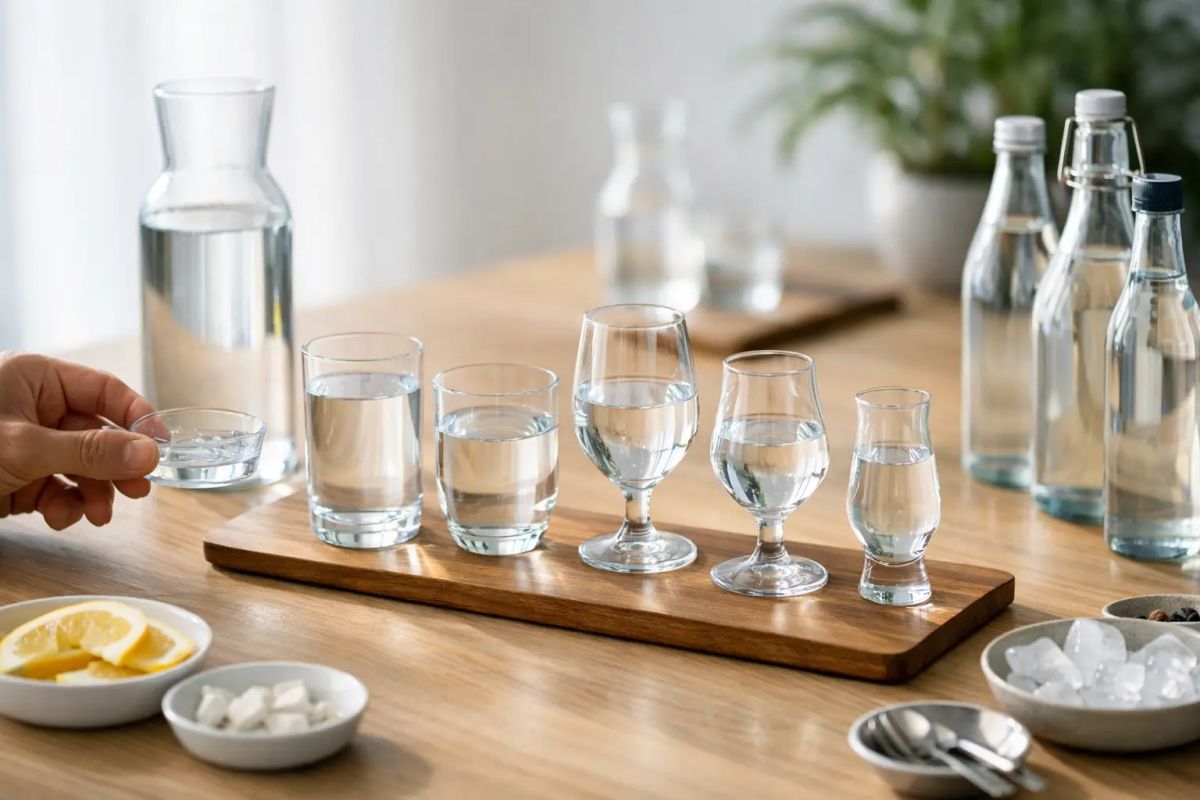
A bottle can look perfectly ordinary until you taste it beside another. One water may feel crisp and fleeting. Another may seem silky, chalky, salty, or quietly structured. A personal water tasting profile gives language to those differences. It is not a scorecard for finding one universally “best” water. It is a thoughtful record of the mineral balance, texture, origin, and sensory qualities that make a particular water feel right for you.
There is a world inside every bottle. Learning to notice it changes a routine pour into a considered choice.
What a personal water tasting profile reveals
Wine has varieties, regions, acidity, and finish. Coffee has roast, origin, body, and aroma. Water deserves the same attention, though its character is more restrained. Its personality is shaped by its source and the minerals it gathers along the way.
Your profile is simply a pattern of preference. You may consistently enjoy waters with a soft, rounded mouthfeel and a gentle mineral presence. Or you may prefer a brisk, lean style with a clean, quick finish. Neither preference is more sophisticated. The point is to recognize what you taste and choose with greater confidence.
This approach also separates two ideas that are often blurred together: composition and enjoyment. A label may show high mineral content, low mineral content, a particular pH, or a notable source. Those facts are useful context. They do not automatically tell you whether the water will suit your palate. Tasting supplies the missing half of the story.
Start with the bottle, then trust your palate
Before opening a bottle, look at what it tells you. Source origin offers the first clue. Spring, mineral, artesian, and glacier-fed waters can suggest different paths through rock, soil, or aquifers, though the category alone never guarantees a specific flavor.
Then look for the mineral analysis. Four entries are especially helpful: calcium, magnesium, sodium, and bicarbonate. They are not a complete tasting prediction, but together they can indicate the water’s likely direction.
Calcium often contributes a firm, slightly chalky or structured impression. Magnesium can read as dry, mineral-forward, or faintly savory to some palates. Sodium may make water seem rounder, softer, or subtly saline, particularly when it is more noticeable relative to the rest of the composition. Bicarbonate can bring a buffered, smooth, sometimes creamy quality and may soften the edges of other mineral notes.
TDS, or total dissolved solids, is another useful reference point. It describes the overall amount of dissolved material in the water, usually expressed in milligrams per liter. Low-TDS waters often feel delicate and light. Higher-TDS waters may feel fuller and more persistent. But TDS is quantity, not character. Two waters with a similar number can taste entirely different because their mineral mixes differ.
pH belongs in the same category: informative, but not a shortcut to taste. It helps describe the water’s measured characteristics, while your palate decides whether the impression is bright, soft, crisp, or substantial.
Taste water in a way that makes comparison possible
A personal water tasting profile becomes more accurate when you create a little consistency. Use a clean, odor-free glass, ideally clear and unpatterned. Avoid strongly flavored food, gum, coffee, or fragrance immediately beforehand. The goal is not ceremony for its own sake. It is to give subtle differences a fair chance to appear.
Taste waters at roughly the same temperature. Very cold water can mute flavor and texture, while warmer water can exaggerate them. Cool, rather than ice-cold, is a useful middle ground. If you are comparing two bottles, pour them side by side and return to each more than once. Contrast makes character easier to identify.
Take a small sip, let it move across your palate, then pause. Notice the opening impression, the middle of the sip, and what remains afterward. Water is quiet, but it is not blank.
You do not need a sommelier’s vocabulary. Start with plain, honest words: light, dense, smooth, sharp, dry, soft, saline, chalky, creamy, crisp, or lingering. If a water reminds you of wet stone, sea air, or a clean mineral spring, write that down too. Sensory language is most valuable when it is personal and repeatable.
Pay attention to texture
Texture is often the fastest route to preference. Does the water feel weightless or broad across the tongue? Does it glide, snap, coat, or disappear? A low-mineral water can feel exceptionally clean and fleeting. A more mineralized water may carry a gentle weight, much like the difference between a delicate broth and one with greater body.
Texture also explains why a water that appears neutral on paper can be memorable in the glass. The experience is not only flavor. It is shape.
Notice the finish
After swallowing, ask one simple question: what stays with you? Some waters leave almost no trace. Others leave a dry mineral note, a soft sweetness, a saline edge, or a stony impression that lingers briefly.
A long finish is not automatically better, and a short finish is not a flaw. A quick, pristine finish may be exactly what you want with a delicate dish. A water with more presence can be compelling on its own or alongside richer flavors. Context matters.
Build your profile around occasions, not rules
The most useful personal water tasting profile has room for more than one favorite. A water you enjoy while reading in the afternoon may not be the one you want at a restaurant table. Preference shifts with food, temperature, glassware, and mood.
For a meal, consider whether the water refreshes the palate or adds its own mineral statement. Delicate seafood, fresh vegetables, and lightly seasoned dishes often leave more room for a subtle, low-mineral water. Foods with deeper savory character, creamier textures, or stronger seasoning can stand beside a water with more structure. These are invitations to experiment, not pairing laws.
At the table, carbonation changes the experience as well. Still water places mineral texture at center stage. Sparkling water introduces lift, tactile energy, and a brighter sense of movement. If you enjoy both, treat them as distinct categories in your notes rather than asking one to replace the other.
A simple way to record what you learn
After tasting a new bottle, capture a few details while the experience is fresh. Record the source and the mineral information shown on the package. Then write a sentence about the first sip, texture, and finish. Finally, give it a context: best on its own, with a meal, very cold, or at room temperature.
Over time, patterns become clear. You may find that you return to waters with a moderate mineral presence and a smooth finish. You may realize that noticeable salinity is exciting with food but less appealing when you want something understated. A profile is valuable because it is allowed to evolve.
Numbers add clarity, but they should not overrule sensation. If a water’s composition seems compelling yet the taste does not connect, that is useful information. If a modest-looking label delivers a texture you love, that matters too.
For an easier way to connect the label to the glass, Water Sommelier can identify a bottled water with your phone camera and surface educational details about its mineral composition, pH, TDS, and source origin. Point. Shoot. Know. Use the information as a prompt for your own tasting notes, not as a substitute for them.
Let preference become discernment
A refined palate is not built by memorizing technical terms or choosing the most expensive bottle. It is built by paying attention, one pour at a time. The mineral profile tells you where a water has been. Your response tells you where it belongs in your life.
Keep tasting with curiosity. The bottle you reach for most often may reveal less about status than about the particular balance of texture, freshness, and finish that feels unmistakably yours.
Scan any bottle. Discover its minerals, origin, and character. Get the Water Sommelier app.