
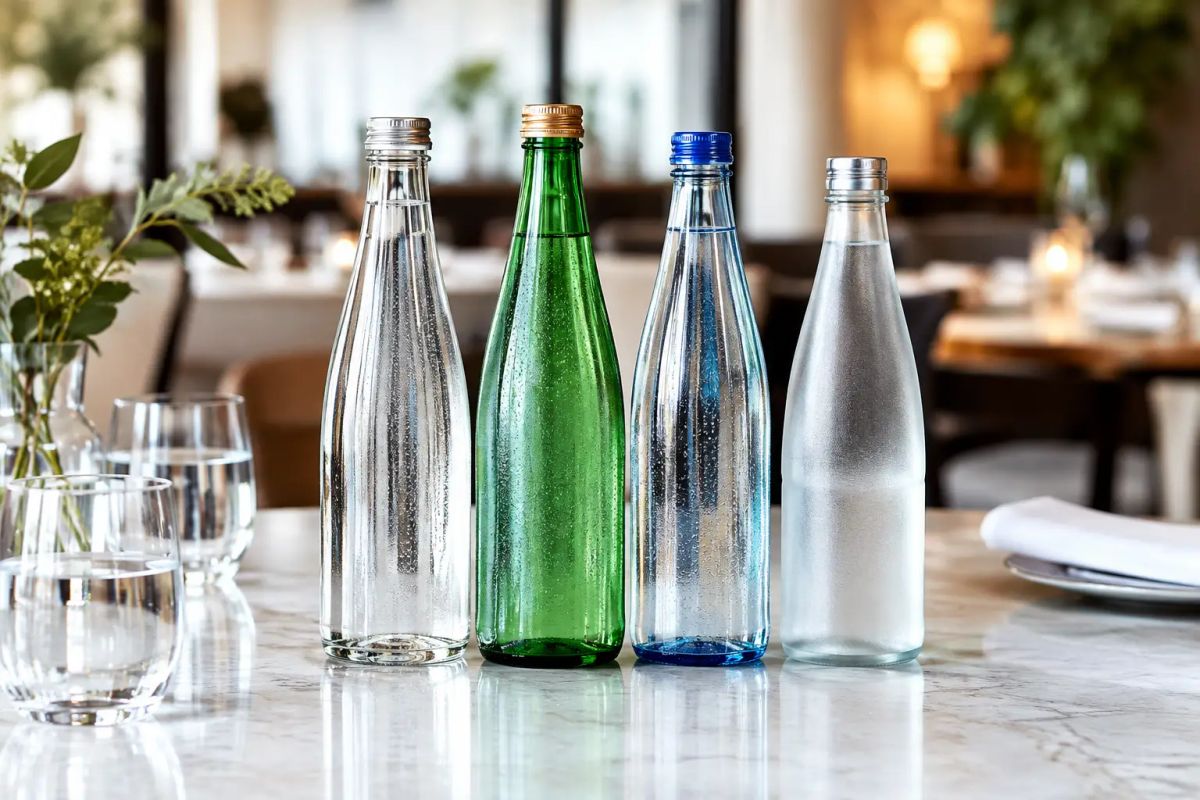
A guest has ordered oysters, Champagne, and a table by the window. Then comes a familiar restaurant question: still or sparkling? It sounds simple, but the answer can shape the meal. When people search for top bottled waters restaurants should offer, they are often looking for more than a recognizable label. They want a water with provenance, a distinct mineral character, and a place at the table that feels considered rather than incidental.
Water deserves the same attention a restaurant gives wine, coffee, olive oil, or bread. There is a world inside every bottle: a source, a geology, a level of carbonation, and a sensory profile that can either support the kitchen's work or compete with it.
What Makes a Bottled Water Restaurant-Worthy?
The best restaurant water list is not necessarily the longest or the most expensive. It is edited with intention. A strong selection gives guests a clear choice between still and sparkling water, then offers meaningful variation in style.
Mineral composition is central to that style. Calcium, magnesium, sodium, bicarbonate, and total dissolved solids, often shortened to TDS, all contribute to how water feels and tastes. Some waters read as soft, delicate, and almost silky. Others are more structured, saline, chalky, or vigorously effervescent. None of these profiles is automatically superior. The right choice depends on the menu, the occasion, and the guest.
Source origin matters, too. Spring waters, mineral waters, and artesian waters each carry a different story, shaped by their journey through rock and aquifer. For a restaurant, that story can add cultural depth to a beverage program, especially when servers can explain it with confidence and restraint.
Presentation completes the experience. A well-chilled bottle, clean glassware, a measured pour, and a visible label all signal care. Fine dining is built from such details.
Top Bottled Waters for Restaurants, by Style
Rather than treating one label as the universal answer, it is more useful to build a water list around distinct roles. These are the styles that create a thoughtful, versatile offering.
The soft, low-intensity still water
A soft still water has a quiet presence. Its mineral profile tends to feel light and unobtrusive, making it a natural choice for tasting menus, delicate seafood, raw preparations, and subtle vegetable dishes. It also gives wine more room to speak.
Acqua Panna is a familiar example in American restaurants. Sourced in Tuscany, it is often selected for its gentle, smooth character and visual fit within classic hospitality settings. Evian, sourced in the French Alps, offers another polished still-water option with a clean, rounded profile that many guests recognize immediately.
These waters work especially well when the restaurant wants still water to feel elegant but not assertive. The trade-off is that a very subtle water may not feel particularly distinctive when served on its own. Its strength is harmony.
The mineral-forward still water
For a list with more personality, consider a still mineral water with greater structure. These waters can have a more pronounced mouthfeel and a finish that invites attention. They are compelling with fuller dishes, aged cheeses, charred vegetables, and savory preparations where a little mineral presence feels appropriate.
Gerolsteiner, from Germany's volcanic Eifel region, is known for a notably mineral-rich character. While it is most often served sparkling, its broader appeal illustrates an important point for restaurant buyers: mineral concentration changes the experience. A water with more dissolved minerals may feel more substantial, almost like another component of the pairing.
This category requires good staff language. “More mineral-forward” is useful and accurate. Avoid presenting mineral content as a health promise. The value here is sensory, culinary, and informational.
The classic fine-bubble sparkling water
A fine, persistent bubble is often the most flexible sparkling style for restaurants. It refreshes the palate without overwhelming it and can suit a broad range of cuisines. This is the dependable choice for a dining room that serves everything from crudo to roast chicken.
S.Pellegrino remains a familiar benchmark for this role. Its Italian origin, gentle effervescence, and recognizable green bottle have made it a fixture of restaurant tables for decades. Badoit, from France, offers another elegant expression, valued for its delicate carbonation and refined service presence.
Fine-bubble sparkling water is particularly useful when a restaurant wants guests to enjoy a bottle throughout the meal. It is generally less forceful than aggressively carbonated alternatives, which can make it easier to pair across several courses.
The vivid, high-energy sparkling water
Some sparkling waters arrive with a sharper, more energetic carbonation. Their bubbles are more pronounced, their personality more immediate. This category can be excellent beside rich foods, fried dishes, spicy cuisine, and casual premium menus where brightness is part of the appeal.
Topo Chico is widely recognized for its lively sparkle and mineral character. It can feel at home in a contemporary restaurant, a raw bar, or a polished neighborhood dining room. The intensity is the point, but it is not universally suited to every plate. With delicate fish or highly aromatic wine, a forceful sparkle may pull focus.
A restaurant does not need multiple high-carbonation choices unless water is a major part of the program. One well-chosen option is often enough.
The American heritage water
A water list can also tell a local or regional story. For restaurants seeking an American-made option with a classic hospitality profile, Mountain Valley is frequently considered. Drawn from a spring in Arkansas and presented in its recognizable glass bottle, it brings a sense of heritage to the table.
Its appeal is not only patriotic or visual. It offers a different narrative from the better-known European water houses and can be especially fitting in restaurants that prioritize American ingredients, regional craftsmanship, or historic dining rituals.
Build the List Around the Menu, Not Prestige
A restaurant's water selection should be an extension of its point of view. An Italian restaurant may naturally favor waters with Italian heritage, but it should still consider whether the mineral intensity and carbonation suit its food. A seafood-focused menu may benefit from a soft still water and a fine-bubble sparkling water. A steakhouse may find that a more mineral-driven sparkling selection stands up well to richer flavors.
Price also matters. A luxury bottle can communicate occasion and theater, yet a water program becomes less compelling when guests feel pushed toward an unnecessarily costly choice. Offer a clear, approachable entry point alongside a more distinctive option. Transparency earns more trust than ceremony alone.
The best programs are easy to understand. A guest should not need a lecture to make a choice. “Soft and still,” “lightly sparkling,” and “mineral-rich with lively bubbles” are usually enough to begin a useful conversation.
Train the Floor Team to Describe Water Well
Water service becomes memorable when it is confident but never precious. Servers do not need to recite laboratory data at the table. They should know the water's source, whether it is still or sparkling, and a few sensory words that distinguish it from the alternatives.
For instance, a server might say that one bottle is soft and neutral for a delicate meal, while another has more mineral presence and a brighter sparkle. That framing helps guests choose according to preference without implying that one water is objectively better.
For deeper education, Water Sommelier offers a practical way to explore bottled water details. Point your phone camera at a bottle to identify the product and view educational information about its mineral composition, pH, TDS, and source origin. It is useful for hospitality professionals, food writers, and curious diners who want to read beyond the front label.
Make Water Service Feel Intentional
Glass is generally the most polished format for on-premise service, particularly when the bottle is placed on the table. It presents the label clearly and supports the sense that water has been chosen, not merely supplied. Proper chilling matters, but ice-cold service can mute subtle flavor and mineral character. Still water is often most expressive when cool rather than freezing; sparkling water can be served colder to preserve its liveliness.
Offer still and sparkling water before the first course arrives, then return to the table with the same attentiveness given to wine. Refill with care. Keep bottle labels facing outward. If the meal includes a water pairing or an especially distinctive bottle, a brief source note can add genuine pleasure.
The point is not to turn every pour into a performance. It is to recognize that water is already part of the guest experience. A considered bottle can sharpen a first course, soften the pace of a long dinner, and leave a final impression of quiet generosity. Choose waters with a point of view, then let the table decide what speaks to it.
Scan any bottle. Discover its minerals, origin, and character. Get the Water Sommelier app.