
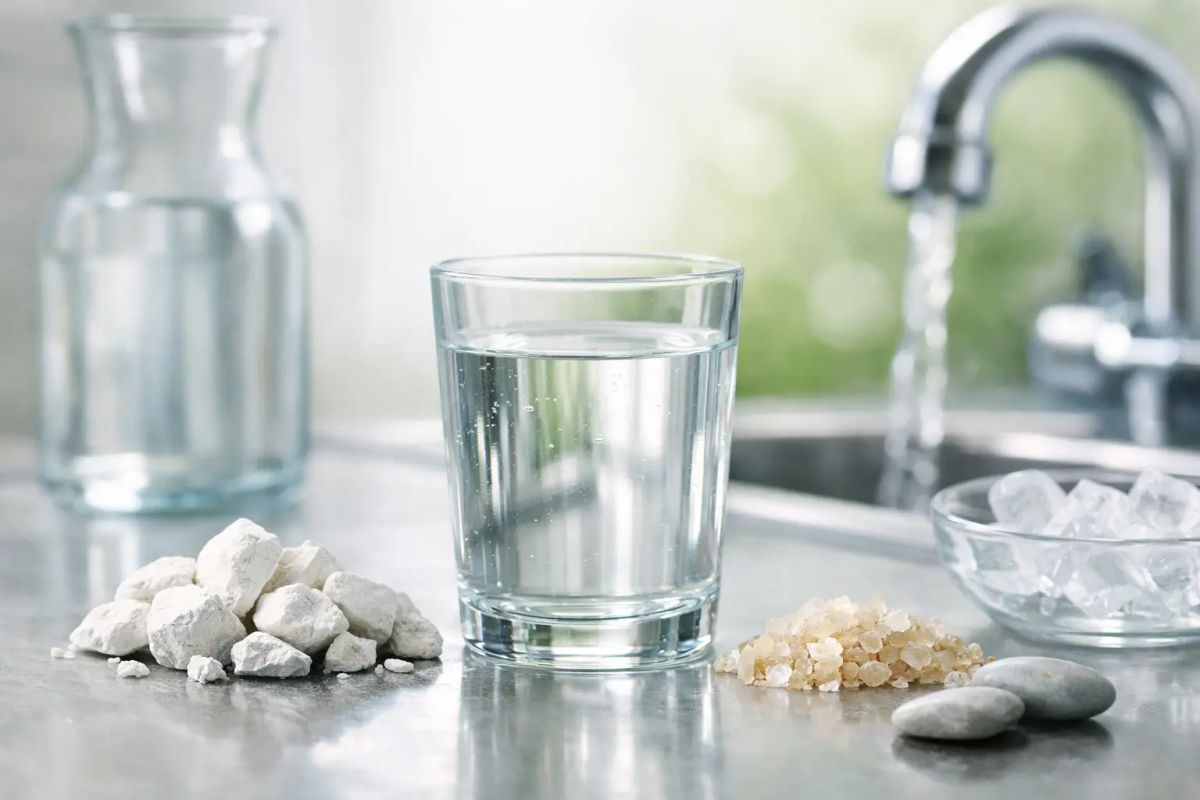
A bottle marked with calcium and magnesium figures is offering more than a nutrition-style fact panel. It is a small geological record. Those numbers can hint at the rock the water met underground, the style of its finish, and why one still water feels soft and quiet while another seems structured, chalky, or almost saline. Understanding calcium magnesium water begins when you stop seeing minerals as background data and start reading them as part of water’s character.
What calcium and magnesium mean in bottled water
Calcium and magnesium are naturally occurring dissolved minerals, usually reported on a bottle label in milligrams per liter, written as mg/L. They enter water as it moves through mineral-bearing rock and soil at the source. The precise result depends on geology, residence time underground, and the route the water takes before it is collected.
Calcium often gives a water a firm, rounded structure. At higher levels, some tasters perceive a chalk-like, creamy, or distinctly mineral impression. Magnesium can bring a drier, more assertive edge, sometimes described as crisp, slightly bitter, or saline. Neither descriptor is automatically praise or criticism. They are style notes, much like acidity, body, or tannin in wine.
The phrase “calcium magnesium water” is not a formal category with one required formula. It is a useful shorthand for water in which these two minerals are meaningful parts of the composition. A label may show one clearly leading the other, or show both in a broader mineral ensemble that includes bicarbonate, sodium, sulfate, potassium, and chloride.
The label is a composition, not a scorecard
There is no universal ideal calcium or magnesium number. A low-mineral water can be delicate and exceptionally elegant. A mineral-rich water can be vivid, textured, and memorable. The question is not which bottle has the biggest number. The question is what the full composition suggests about the experience in the glass.
Start by locating calcium and magnesium, then read outward. Bicarbonate is especially useful context because it commonly appears alongside calcium and magnesium in naturally mineralized waters. Together, these elements can create a sense of weight and an enduring finish. Sulfate may sharpen that profile, while sodium and chloride can add a more savory character.
A few useful ways to interpret the figures:
- Low calcium and magnesium often correspond with a lighter, cleaner, less mineral-forward impression.
- Moderate levels can create balance and gentle structure without taking over the palate.
- Higher levels, particularly when paired with notable bicarbonate or sulfate, may produce a more emphatic, lingering mineral character.
- The ratio matters. Two waters with similar total mineral content can taste entirely different when calcium, magnesium, bicarbonate, and sodium are arranged differently.
Numbers describe composition, not quality. The pleasure comes from recognizing the style you prefer and choosing it with intention.
Understanding calcium magnesium water through TDS
TDS, or total dissolved solids, is often the first number shoppers notice. It measures the combined amount of dissolved material in water, generally expressed in mg/L. It can be a helpful orientation point, but it does not tell the whole story.
Think of TDS as the volume of an orchestra, not the identity of each instrument. Two waters can carry the same approximate TDS and still have very different personalities. One might be calcium-bicarbonate led, round and stony. Another might lean toward magnesium and sulfate, with a sharper, drier close. A third could have a more sodium-forward, savory profile.
This is why calcium and magnesium deserve attention beyond the TDS figure. They help explain where mineral presence is coming from. A comparatively high TDS water may feel surprisingly balanced if its mineral profile is integrated. A lower-TDS water may still register clearly if one mineral is prominent enough to shape the finish.
pH is another commonly printed figure, but it should be read with care. It describes acidity or alkalinity under the conditions measured, not a complete sensory forecast. Carbonation, temperature, and exposure to air can all influence how a water presents in the glass. pH is one detail in the portrait, not the portrait itself.
Why source origin changes the conversation
The most compelling part of mineral water is that composition is rooted in place. A spring emerging from limestone-rich terrain may develop a calcium-bicarbonate signature. Water that encounters dolomite-bearing formations may reflect both calcium and magnesium. The label becomes an invitation to consider landscape, not merely a list of parts.
Source origin also helps distinguish a water’s intended identity. Some bottled waters are prized for a naturally consistent mineral profile and a recognizable sense of place. Others are designed for a lighter, more neutral drinking experience. Neither approach is inherently superior, but they answer different occasions.
For a quiet morning, a low-mineral still water may let coffee or fruit take center stage. At a long lunch, a water with more calcium and magnesium can hold its own beside rich textures, roasted foods, or aged cheese. With sparkling water, carbonation adds another layer: bubbles can lift mineral notes, making a structured composition feel more energetic and pronounced.
How to taste calcium and magnesium in the glass
You do not need specialized equipment or a ceremonial routine. A clear glass, a relaxed pace, and a little attention are enough. Serve still water cool rather than ice-cold, since extreme cold can mute aroma and texture. Take a small sip and let it move across the palate before swallowing.
Notice the opening first. Does the water feel featherlight, silky, rounded, or immediate? Then focus on the mid-palate. Calcium may contribute a gentle density or a mineral softness. Magnesium may create a firmer line through the taste, often more evident toward the finish. Finally, pay attention to what remains after the sip: a clean disappearance, a stony trace, a dry edge, or a subtle salinity.
It can be revealing to taste two bottles side by side. Choose waters with different calcium and magnesium figures, ideally with their mineral panels available. Taste without reading the labels first, then compare your impressions with the data. This simple exercise turns abstract numbers into a vocabulary you can actually use.
Reading a calcium-magnesium profile with confidence
A well-designed label may list minerals individually, but layouts vary. Look for calcium, magnesium, sodium, bicarbonate, sulfate, chloride, potassium, pH, and TDS where available. The absence of a number does not necessarily mean the mineral is absent; it may simply not be presented on that particular label.
Be cautious about treating one line item as the entire story. Calcium at a given level will not taste identical across every bottle because its companions matter. A water with substantial bicarbonate may feel rounder than a water with the same calcium figure alongside sulfate. Carbonated and still versions can also present their mineral structure differently.
Water Sommelier brings this kind of information into view with a simple camera scan, helping identify a bottle and surface its mineral composition, pH, TDS, and source origin for educational exploration. Point. Shoot. Know. The useful next step is always your own palate: compare what the data suggests with what you notice.
A more considered choice at the table
Choosing water by mineral character is not about turning every meal into a technical exercise. It is about recognizing that water has texture, origin, and style. Calcium and magnesium offer a particularly clear entry point because they often shape the feel of a water as much as its flavor.
The next time a bottle catches your eye, pause at the mineral panel before you open it. Read the calcium and magnesium figures alongside bicarbonate and TDS, then take a sip slowly enough to see whether the landscape on the label appears in the glass.
Scan any bottle. Discover its minerals, origin, and character. Get the Water Sommelier app.