
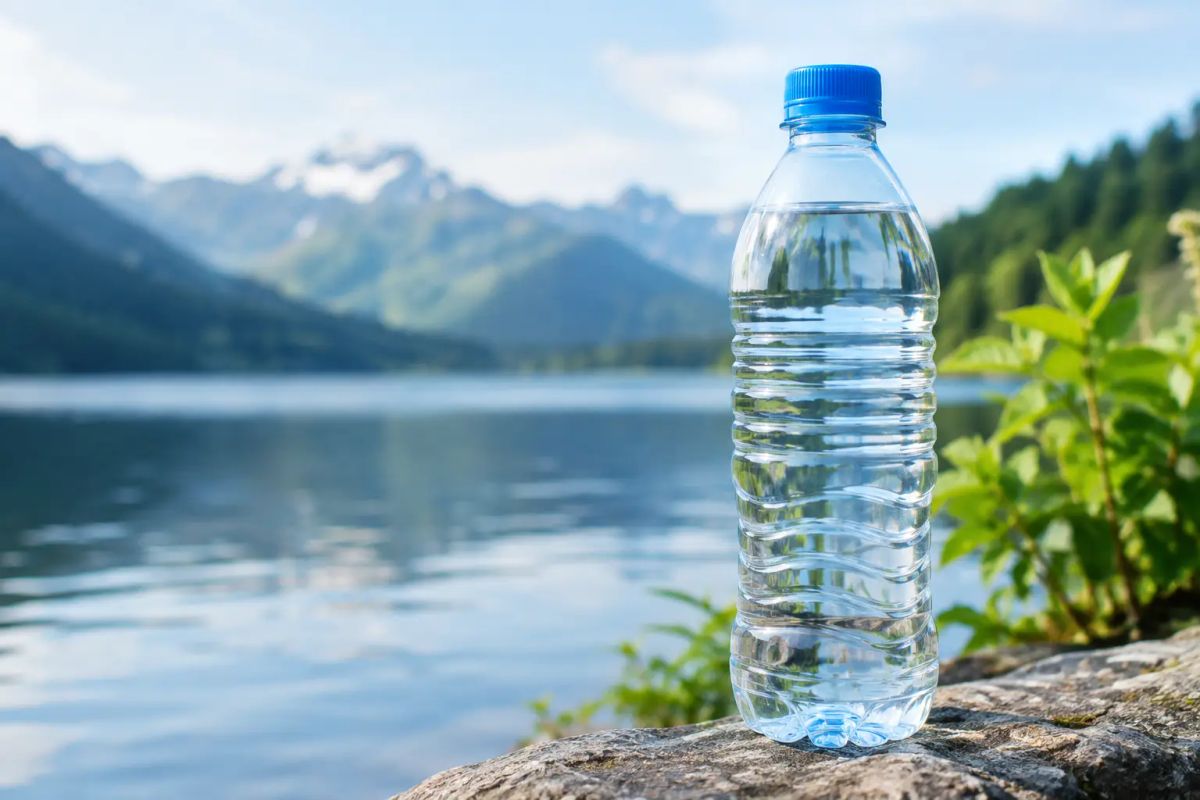
A bottle can list calcium, magnesium, bicarbonate, pH, and a distant place name, yet one phrase often sets the entire story in motion: water source. So, what does water source mean? It identifies where the water begins before bottling and, in many cases, hints at the geological journey that shapes its mineral character and taste.
There is a world inside every bottle. The source is its opening chapter.
What Does Water Source Mean?
A water source is the natural or municipal point from which bottled water is collected. It may be a spring rising at the surface, an underground aquifer reached through a well, an artesian formation under natural pressure, or a public water supply that is then treated and purified for bottling.
The term tells you about origin, not necessarily every step that follows. Water may travel from a source to a bottling facility, undergo permitted treatment, receive carbonation, or be blended according to the product’s stated standards. That is why the source statement is most useful when read alongside the rest of the label.
For naturally sourced waters, origin can be closely tied to mineral composition. As water moves through rock and soil, it can dissolve small amounts of calcium, magnesium, sodium, bicarbonate, sulfate, silica, and other naturally occurring compounds. The result is a distinctive mineral balance, expressed both in numbers and in the glass.
The Main Types of Bottled Water Sources
Not all source terms mean the same thing. A few words can signal very different routes from landscape to bottle.
Spring water
Spring water comes from an underground formation and flows naturally to the surface. It can also be collected through a borehole that accesses the same underground formation, provided the water has the characteristics of the natural spring.
Spring waters often carry a strong sense of place. Their character depends on the local geology: limestone may contribute a softer, more rounded mineral profile, while volcanic terrain can create a different balance altogether. But “spring” is not a guarantee of a particular taste, mineral level, or quality tier. One spring can be delicate and low in dissolved minerals; another can be firm, saline-leaning, and intensely mineral.
Artesian water
Artesian water comes from a confined aquifer, an underground layer of water-bearing rock or sediment held between less permeable layers. Natural pressure in that formation causes the water level in a well to rise above the aquifer.
On a label, artesian suggests a specific kind of underground origin rather than a flavor promise. It may have a composed, mineral-driven profile, but its actual composition depends on the aquifer and the path the water took through the earth. The word is about the formation, not a universal tasting note.
Well water
Well water is drawn from below ground through a hole or borehole that taps an aquifer. It differs from spring water because it is not defined by natural flow to the surface.
This is a broad category. A well can access water with a striking mineral signature, or water that is comparatively neutral. If you are choosing by taste or composition, the mineral analysis matters more than the word “well” alone.
Mineral water
Natural mineral water comes from a protected underground source and contains a consistent level of naturally occurring minerals and trace elements. In the United States, a bottled water labeled “mineral water” must contain at least 250 parts per million total dissolved solids, or TDS, from the source.
That threshold tells you that mineral water has substance, but it does not tell you which minerals dominate. Two waters with similar TDS can taste entirely different. A bicarbonate-rich water may feel rounded and structured, while one higher in sulfate can seem drier or more assertive. Sodium can add a subtle saline impression. Calcium and magnesium often contribute weight and texture.
Purified water
Purified water is defined primarily by treatment rather than by a singular natural source. It may begin as water from a municipal supply or another approved source and then be processed through methods such as reverse osmosis, distillation, deionization, or other purification techniques.
Purified water can be a clean, neutral choice for people who prefer a lighter sensory profile. Its source statement and treatment description are especially useful together: they explain both where the water began and how it became the final product in the bottle.
Source Origin Is Not a Quality Ranking
It is tempting to treat certain source words as shorthand for “better.” That misses the point. A spring, artesian aquifer, and purified municipal source are different categories, not a hierarchy.
The better question is: what experience are you looking for? If you enjoy a sense of terroir, a naturally mineralized spring or mineral water may be compelling. If you prefer a quieter profile, purified water may suit the moment. For a dinner table, contrast can be part of the pleasure: a crisp, low-mineral water beside a delicate dish, or a fuller-bodied mineral water beside richer flavors.
Source tells you where to begin looking. Mineral data tells you what is actually in the bottle.
How Source Influences Taste
Water is not flavorless in the sensory sense. Its taste can be subtle, but it is real. Mineral composition, carbonation, temperature, and packaging all influence what you perceive.
Source matters because geology can shape the composition of water before it is bottled. Water that has spent more time moving through mineral-rich rock may have higher TDS and a more pronounced palate. Water from a different formation may remain exceptionally light and soft.
Still, source is only one part of the tasting picture. A water’s final profile can also reflect treatment, added carbonation, and whether minerals are naturally present or added after purification. The label should make those distinctions clear when they apply.
When tasting, notice the opening impression, texture across the palate, and finish. Does the water seem silky, crisp, chalky, saline, creamy, dry, or brisk? These are descriptive observations, not quality judgments. A refined water experience is about recognizing character, then choosing what suits the occasion.
How to Read a Water Label Beyond the Source
The source line is valuable, but it should not be read in isolation. Look at the product name, stated water type, source location, and any mineral analysis provided by the producer. Calcium, magnesium, sodium, bicarbonate, and TDS give the source story more dimension.
TDS is especially useful as a broad measure of dissolved mineral content. Lower TDS waters often present as lighter and more neutral, while higher TDS waters can feel more substantial. But it is not a score. A modest-TDS water can be elegant and expressive, while a high-TDS water can be vivid and memorable.
pH is another number you may see. It describes how acidic or alkaline the water is, but it does not replace mineral information or define how a water will taste. Consider it one detail in a larger composition.
If the label is difficult to interpret, Water Sommelier can help identify a bottled water from your camera and present educational details about its source origin, mineral composition, pH, and TDS. Point. Shoot. Know. The goal is not to turn every purchase into homework. It is to make a quick, informed choice feel more considered.
A Few Common Source-Label Misconceptions
“Natural” does not always mean untreated. Depending on the water category and applicable standards, bottled water may be treated while retaining a source designation. Read the full package rather than relying on a single front-label word.
“From the mountains” is evocative, but it is not a complete technical description. The specific spring, well, aquifer, or municipal source statement provides more useful context. Likewise, a dramatic location alone does not tell you the mineral content.
And “mineral water” does not mean every mineral is present in significant amounts. The analysis is what reveals the balance. If sodium matters to your preferences, look for sodium. If you are curious about texture, compare calcium, magnesium, bicarbonate, and TDS across bottles.
Choose Water With More Context
The next time you reach for a bottle, pause at the source statement. Is it a spring emerging from an underground formation? An artesian aquifer under pressure? A purified water defined by its process? That one detail reframes the bottle from a generic beverage into a product of place, geology, and craft.
Read the origin. Notice the minerals. Taste with attention. A better water choice does not have to be louder or more complicated - it simply starts with knowing the story in your glass.
Scan any bottle. Discover its minerals, origin, and character. Get the Water Sommelier app.