
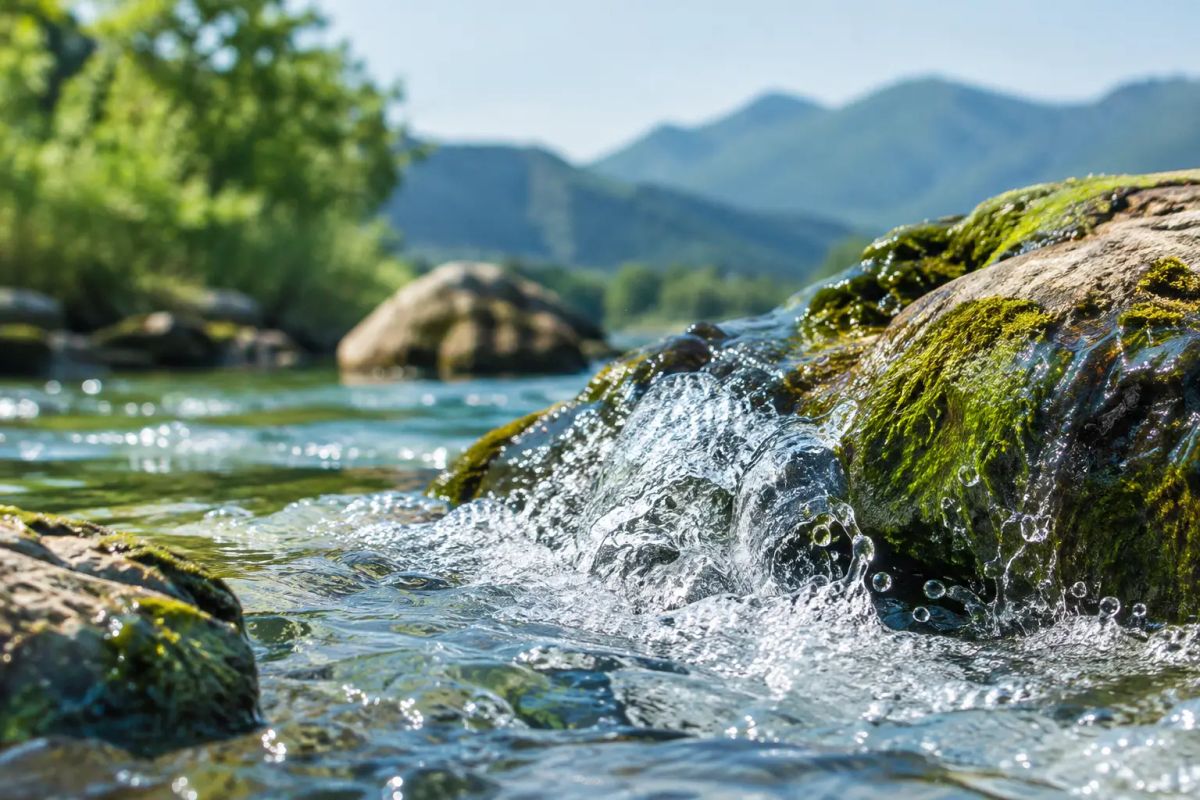
A bottle that releases a fine, persistent stream of bubbles can feel almost theatrical. But when the sparkle comes from the source itself, the story began long before bottling - beneath layers of rock, under pressure, and over a journey that may have taken years. What makes water naturally sparkling is not a trick of packaging. It is geology expressed in the glass.
Natural sparkling water is a particular kind of mineral water: groundwater that encounters carbon dioxide underground and retains enough of that gas, under the right conditions, to emerge with natural effervescence. The result can be delicate and creamy, brisk and mineral-edged, or intensely lively. There is a world inside every bottle.
What makes water naturally sparkling?
At its center, natural sparkle is carbon dioxide, or CO2. Underground, carbon dioxide can rise from deep geological activity, including volcanic regions, or form through natural processes in soil and rock. As rain and snowmelt seep down through the earth, the water meets this gas under pressure.
Pressure matters. At depth, CO2 dissolves into water far more readily than it does at the surface. The water effectively carries the gas with it as it moves through fissures, porous stone, and underground aquifers. When the water reaches a spring or is drawn at the source, its dissolved CO2 creates the characteristic lift of natural sparkling water.
Open the bottle and the pressure drops. The gas begins to leave the liquid, forming bubbles. That familiar hiss is the water adjusting from its protected underground environment to the atmosphere in your hands.
Not every spring with dissolved carbon dioxide becomes a naturally sparkling bottled water. The source must have sufficient gas, and the producer must handle it carefully enough to preserve the water's defining character. Some source waters lose their effervescence after emerging, which is why bottling method is part of the story.
The role of rock, time, and mineral composition
Carbon dioxide creates the bubbles, but the landscape gives those bubbles context. As water travels underground, it dissolves small amounts of the rock it encounters. Limestone may contribute calcium and bicarbonate. Dolomite can add magnesium. Other geological formations may bring sodium, sulfate, silica, or trace minerals into the final composition.
This is why two naturally sparkling waters can feel completely different. One may be soft and rounded, with a quiet mousse-like texture. Another may be firm, saline, and sharply structured. The bubbles are only one element of the experience. Mineral balance shapes the palate, finish, and the way carbonation presents itself.
Bicarbonate deserves special attention because it often appears prominently on mineral water labels. It is not the same thing as carbonation, although the two are closely related in the underground environment. Bicarbonate is a dissolved mineral component formed through water's interaction with carbon dioxide and certain rocks. It can contribute a smooth, slightly alkaline-tasting impression, while CO2 supplies the actual sparkle.
Total dissolved solids, or TDS, offers another useful clue. TDS measures the concentration of dissolved material in water. A higher number may indicate a more mineral-forward taste, but it does not automatically mean a water will be more sparkling, better, or more intense in every way. Carbonation and mineralization are related through source geology, yet they are separate measurements.
Naturally carbonated versus carbonated at bottling
The phrase “naturally sparkling” can sound straightforward, but labels and production practices deserve a closer read. There are several legitimate ways a sparkling water can reach a bottle.
A naturally carbonated water comes from a source where CO2 is present underground. In some cases, the water is bottled with its original gas intact. In others, the water and gas are separated during collection or treatment, then the source CO2 is added back before bottling. The final water may still preserve its source identity, but the degree of naturalness depends on the producer's process and the label language used in its market.
A carbonated water, by contrast, may begin as still spring water, purified water, or another water base and receive added CO2 during production. This can create a clean, crisp sparkling drink, but it is not the same sensory or geological proposition as a naturally effervescent mineral source.
The distinction is not a hierarchy. Added carbonation can be precise and refreshing; natural carbonation can be more expressive of place. The useful question is simply: what experience are you choosing?
Why natural bubbles can taste different
Bubbles have texture. Their size, persistence, and intensity influence how water feels across the tongue. Natural sparkling waters are often described as having fine bubbles, though that is not a universal rule. A source's dissolved gas level, mineral composition, bottling pressure, temperature, and time since opening all affect what you perceive.
High carbonation can feel energetic and pointed, especially when paired with a lean mineral profile. A water with moderate carbonation and more calcium or bicarbonate may seem silkier and broader. Sodium can heighten a savory impression. Sulfate may bring a drying, structured finish. None of these traits exists in isolation. They work together like acidity, tannin, and texture in wine.
Temperature changes the experience, too. Very cold water holds CO2 more effectively, so its sparkle remains tighter and more restrained. As the glass warms, bubbles release more readily and aromatic mineral notes can become easier to notice. For tasting, chilled is useful, but ice-cold can hide detail.
Glassware also has a role. A clean, narrow glass helps preserve a rising bead of bubbles, while a wide vessel releases gas more quickly and can make mineral aroma more apparent. Neither is wrong. The choice depends on whether you want to study the water's texture or simply enjoy its refreshment alongside a meal.
Reading the bottle with a sommelier's eye
Start with the source. A named spring, aquifer, or region tells you that the water has an origin worth considering. Then look for the mineral analysis, usually expressed in milligrams per liter. Calcium, magnesium, sodium, bicarbonate, sulfate, chloride, and silica each offer clues to style.
Next, look for language around carbonation. “Naturally sparkling,” “naturally carbonated,” “carbonated natural mineral water,” and “with added carbon dioxide” are not interchangeable phrases. Regulations and wording vary, so the bottle may not explain every production detail. Still, the label provides a more meaningful starting point than judging by bubble strength alone.
pH is often printed as well. It describes acidity or alkalinity at the time of measurement, but it is not a shortcut to taste, quality, or source character. The same restraint applies to TDS. These numbers are useful when viewed alongside origin and mineral composition, not as scores to chase.
If you are comparing bottles at a restaurant or shop, record the details that matter to your palate: source, carbonation style, key minerals, bubble feel, and finish. Water Sommelier makes this easier by letting you point your phone camera at a bottle to identify the product and explore its mineral composition, pH, TDS, and source origin. Point. Shoot. Know.
Pairing naturally sparkling water with food
Natural sparkle has a place at the table because it can either sharpen contrast or echo a dish's texture. A high-mineral, assertively carbonated water can stand beside rich preparations, aged cheese, cured foods, or fried dishes without disappearing. Its bubbles reset the palate between bites, while a saline or mineral finish can feel especially harmonious with seafood.
A gentler, lower-intensity sparkling water is often more elegant with delicate fish, fresh vegetables, lightly seasoned grains, and softly textured dishes. With fine dining, the goal is not to assign rigid rules. It is to avoid letting the water flatten the food or the food erase the water.
Wine receives this kind of consideration as a matter of course. Water deserves the same attention, particularly when it arrives with a distinct source, mineral structure, and natural effervescence.
A small ritual worth keeping
The next time you open a naturally sparkling water, pause before the first sip. Notice whether the bubbles rush upward or rise in a fine, steady line. Taste for chalk, salt, stone, softness, or a clean mineral snap. Read the source rather than treating it as decoration.
The sparkle is carbon dioxide. The character is the place it came from.
Scan any bottle. Discover its minerals, origin, and character. Get the Water Sommelier app.