
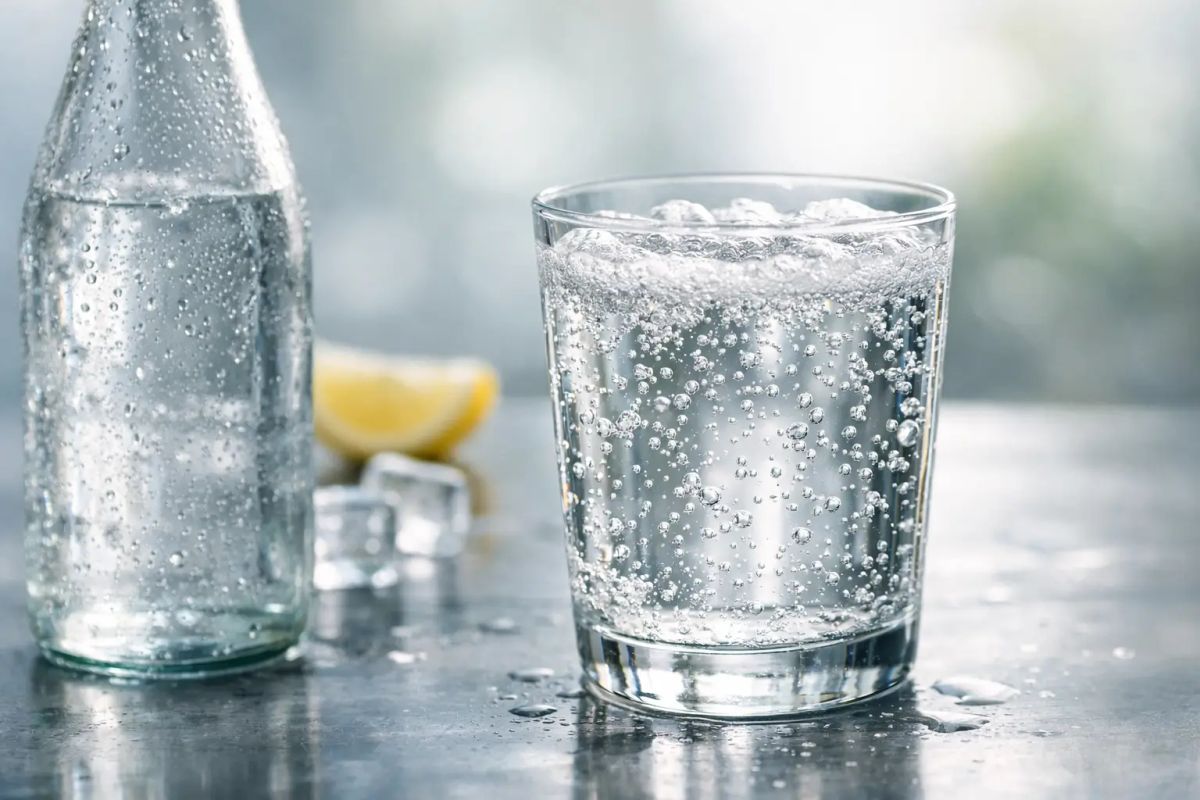
A bottle opens with a crisp sigh. Tiny beads rise in steady streams, gather at the surface, and lift aromas that still water keeps quiet. Why does mineral water fizz? The short answer is carbon dioxide. The more interesting answer is that every bubble reflects a relationship between geology, pressure, temperature, and the way a water was bottled.
There is a world inside every bottle. Sparkling mineral water is not simply still water with bubbles added, though that is one valid style. Its effervescence may begin deep underground, where water moves through rock formations in contact with naturally occurring carbon dioxide. Or it may be carefully carbonated at bottling to create a consistent, refined sparkle.
Why Does Mineral Water Fizz?
Mineral water fizzes because it contains dissolved carbon dioxide, written chemically as CO2. Under pressure, CO2 can remain dissolved in water. Once you twist off the cap or remove a cork, that pressure drops. The dissolved gas begins to escape, forming the bubbles that rise through the glass.
This is the same basic principle behind sparkling wine, soda, and other carbonated drinks. A sealed bottle is a pressurized environment. Opening it changes the conditions immediately, and the water releases some of the CO2 it can no longer hold.
Bubbles need a place to begin. Microscopic imperfections in the glass, a tiny particle, or a scratch on the bottle can act as a nucleation site, a starting point where dissolved gas gathers into a visible bubble. That is why a pristine glass may look calmer at first, while a textured glass can produce lively trails of bubbles.
The dramatic sound of opening a bottle is not the fizz itself. It is the rapid release of pressurized gas from the space above the water. The fizz in your glass follows as CO2 leaves the liquid more gradually.
Natural Sparkle and Added Carbonation
Not all sparkling mineral water gets its bubbles in the same way. The label language can be revealing, although terms vary by producer and market.
Naturally carbonated mineral water comes from a source where carbon dioxide is present underground alongside the water. In some cases, water and gas emerge together from the source. In others, producers may collect the naturally occurring gas and reintroduce it after bottling processes, preserving the source's intended character.
Carbonated mineral water may begin as mineral water from a protected source and receive added CO2 before bottling. This does not automatically make it lesser. Added carbonation can be executed with real precision, creating a clean, energetic texture while allowing the water's mineral profile to remain the central voice.
The distinction matters because carbonation is part of the sensory composition. Natural source carbonation can feel integrated and gentle, sometimes with a soft, persistent mousse. Added carbonation can range from delicate to forceful depending on the producer's chosen pressure and bubble size. Neither style is universally better. The right choice depends on whether you want subtle lift at the table or a sharper, more emphatic palate-cleansing effect.
Minerals Shape the Taste, Not the Fizz
A common assumption is that minerals are what make mineral water bubbly. They are not. Carbon dioxide creates the fizz. Minerals shape how the water tastes and feels once it reaches your palate.
Calcium and magnesium can contribute structure, density, or a faintly chalky impression. Sodium may make a water seem rounder or more savory. Bicarbonate can bring a softer, almost creamy quality and can influence the way acidity is perceived. Sulfates may add a dry, mineral-driven edge.
Those elements do not generate bubbles in a sealed bottle. But they can change the experience of carbonation. A highly mineralized water with assertive effervescence may feel broad, stony, and commanding. A low-mineral sparkling water may feel light, bright, and quick on the finish. Think of CO2 as the movement and minerals as the landscape it moves through.
This is why two waters with similar levels of carbonation can feel completely different. One may have a fine, satin-like sparkle; another may arrive with a more vigorous bite. The bottle is presenting both gas and geology.
Carbonic Acid and That Bright Edge
When CO2 dissolves in water, a small portion reacts to form carbonic acid. This is a weak acid, but it is enough to create the bright, tangy sensation people associate with sparkling water.
That sensation is not simply flavor. Carbonation activates tactile and sensory responses in the mouth, creating a gentle prickle or a more assertive sting depending on the water. Temperature, mineral balance, and the amount of dissolved CO2 all affect the final impression.
A water can also have a naturally higher pH because of its mineral composition while still tasting lively from carbonation. pH and sparkle are related only indirectly. The pH describes acidity or alkalinity under a particular measurement condition, while the fizz is primarily about dissolved CO2 and pressure.
Temperature Changes Everything
If you want a sparkling water to hold its fizz, keep it cold. Cold water retains more dissolved CO2 than warm water. As a bottle warms, gas escapes more readily, and the bubbles become less persistent.
Serving temperature also changes what you taste. Very cold water can mute aroma and soften the perception of mineral detail, making strong carbonation feel more restrained. As the water warms slightly, its mineral character often becomes easier to notice, and the bubbles may feel more expansive.
For a brisk, refreshing pour, serve sparkling mineral water well chilled. For a more attentive tasting, allow a small portion in the glass to rest for a few minutes. You may notice the water's texture shifting from energetic to silky as the carbonation slowly relaxes.
Why Some Mineral Waters Have Finer Bubbles
Bubble size is one of the most noticeable differences between sparkling waters. Fine bubbles often feel elegant and creamy, while larger bubbles can feel bold, immediate, and more forceful. Several factors are at work.
Pressure matters. More dissolved CO2 generally creates a more vigorous release when the bottle is opened. The bottling method matters, too, as does the temperature of the water. Even the glass changes the performance: a narrow glass can preserve the sensation of aroma and effervescence, while a wide tumbler lets gas disperse more quickly.
A bubble's visual size is not a perfect measure of quality. Large bubbles may suit a salty snack, a rich cheese course, or a casual lunch outdoors. Fine, persistent effervescence can be especially compelling beside delicate seafood, raw vegetables, or a composed tasting menu. Context is part of the pleasure.
A Better Way to Taste the Fizz
Start with a clean glass and pour gently down the side if you want to preserve carbonation. Pour more directly if you want a livelier aromatic release. Observe the bubble streams before taking a sip, then notice whether the texture feels soft, sharp, creamy, dry, or energetic.
On the palate, separate the sensation into two questions: What are the bubbles doing? And what are the minerals doing? The first reveals carbonation style. The second reveals source character. With practice, sparkling water becomes more than a cold beverage. It becomes a small study in place and composition.
For a clearer read on what is behind that character, Water Sommelier lets you point your phone camera at a bottle to identify the product and explore its listed mineral composition, pH, TDS, and source origin. Point. Shoot. Know.
The next time a bottle gives that first clean hiss, pause before you drink. The fizz is carbon dioxide escaping pressure, but the experience is more layered: a source's geology, a producer's choices, a serving temperature, and a glass full of rising detail.
Scan any bottle. Discover its minerals, origin, and character. Get the Water Sommelier app.